



What a Leading CMU Researcher Taught Us About AI, Remote Work, and Martech Leadership
- Dr. Denise Rousseau, professor of Organizational Behavior and Public Policy at Carnegie Mellon University
- AI and Automation, Digital Transformation, Managing Org Transformation, Managing Your Career, Other Martech, Strategy and Trends
What happens when marketers adopt AI faster than they can build trust, expertise, and better ways of working? In a wide-ranging conversation with the Martechify team, Dr. Denise Rousseau, professor of Organizational Behavior and Public Policy at Carnegie Mellon University, brought a much-needed human lens to some of the biggest questions facing marketing and technology leaders today. From remote work and hybrid schedules to AI adoption, layoffs, loyalty, and leadership credibility, Dr. Rousseau made one point clear: The future of work will not be shaped by tools alone. It will be shaped by the quality of the relationships organizations build with their people.
Watch the full interview with Dr. Denise Rousseau of Carnegie Mellon University to hear her surprising take on AI, hybrid work, layoffs, and leadership. Learn why the future of work depends less on tools alone and more on trust, expertise, and how leaders treat people.
A human question at the center of work
That perspective grew out of her own experience. Dr. Rousseau said that watching her father suffer from the treatment he received on the job helped shape the question that defined her career: “How do we make people’s jobs and work lives better?” That question led her to work she loves and has continued to inform her research, especially as companies ask employees to navigate constant disruption.
Shorter planning cycles, weaker development
For martech teams, disruption has become the norm. Marketing organizations have been asked to move faster, learn new tools, prove ROI in shorter cycles, and respond to shifting customer expectations, often while dealing with restructuring and budget pressure. Dr. Rousseau said that one of the most important post-pandemic changes in how organizations operate is that “the planning cycle is much shorter.” Employers who once thought in terms of three to five years are now often planning in six-month windows.
That change had consequences. When organizations shortened their horizons, they also tended to reduce long-term investment in people. Dr. Rousseau mentioned that training and development has taken a hit in many workplaces, replaced by highly tactical, “for this job only” training. For marketers, that means many teams are being trained on the latest platform or workflow, but not necessarily being developed into stronger strategists, analysts, or leaders. In a field already changing at high speed, this creates a serious gap between execution and capability.
That change had consequences. When organizations shortened their horizons, they also tended to reduce long-term investment in people. Dr. Rousseau mentioned that training and development has taken a hit in many workplaces, replaced by highly tactical, “for this job only” training. For marketers, that means many teams are being trained on the latest platform or workflow, but not necessarily being developed into stronger strategists, analysts, or leaders. In a field already changing at high speed, this creates a serious gap between execution and capability.
What remote work revealed
The tension became visible in the debate over remote and hybrid work. Dr. Rousseau said the research she reviewed showed that remote work delivers better results than many leaders presume. Employees adapt, work-life conflict declines, and retention improves. In her words, “People liked it.” Yet many companies still pushed hard for in-office returns, often because managers felt more comfortable when people were physically present and because companies needed to make use of office space they leased or owned.
Dr. Rousseau did not present hybrid work as a one-size-fits-all solution, but she mentioned that it has emerged as a practical compromise in many organizations. In the research she reviewed, many companies have tested schedules built around three days remote and two days in the office, though she noted that this reflects common practice, not necessarily an ideal formula. She said hybrid arrangements appeal to employees who value flexibility while also giving managers reassurance through regular in-person interaction. At the same time, Dr. Rousseau stressed that office time should be used intentionally. “Don’t waste the time once people are in the office,” Dr. Rousseau said. She suggested using those in-person days for development, coordination, relationship building, and the kinds of conversations that are often harder to replicate remotely.
Dr. Rousseau did not present hybrid work as a one-size-fits-all solution, but she mentioned that it has emerged as a practical compromise in many organizations. In the research she reviewed, many companies have tested schedules built around three days remote and two days in the office, though she noted that this reflects common practice, not necessarily an ideal formula. She said hybrid arrangements appeal to employees who value flexibility while also giving managers reassurance through regular in-person interaction. At the same time, Dr. Rousseau stressed that office time should be used intentionally. “Don’t waste the time once people are in the office,” Dr. Rousseau said. She suggested using those in-person days for development, coordination, relationship building, and the kinds of conversations that are often harder to replicate remotely.
What research shows boosts people’s productivity
Dr. Rousseau also pointed to the physical work environment as an often-overlooked factor in employee focus and well-being. She mentioned an example, from Carnegie Mellon’s Robert L. Preger Intelligent Workplace laboratory, that examined ambient air and found that giving people more control over airflow in their immediate workspace had a substantial effect. “That customization turns out to be valuable to people in terms of their ability to focus,” Dr. Rousseau said. She noted that comfort is highly individual, with preferences varying around temperature, air movement, and the overall feel of the space. In her view, even relatively small environmental adjustments can help people work more effectively and feel better throughout the day.
We also discussed the pros and cons of a four-day work week. Dr. Rousseau prefaced it with historical context on how shortening the work week affected people’s productivity. She noted that the five-day schedule itself was once a major shift, explaining that in the early 20th century manufacturers began moving away from the six-day or five-and-a-half-day week and found that productivity improved as hours were reduced. Drawing on later research and natural experiments, she said the pattern has continued over time. “As the work week shortens, labor productivity goes up,” Dr. Rousseau said.
She added that in many modern knowledge-based roles, a shorter week can work well if expectations are clear and teams are set up properly. In her view, “the evidence would say that some compression, or at least a reduction in the number of days, could be implemented without meaningful loss in labor productivity.” Rather than treating a four-day week as a radical idea, she suggested that organizations test it thoughtfully and study what design, support, and workflow changes make it successful for them.
We also discussed the pros and cons of a four-day work week. Dr. Rousseau prefaced it with historical context on how shortening the work week affected people’s productivity. She noted that the five-day schedule itself was once a major shift, explaining that in the early 20th century manufacturers began moving away from the six-day or five-and-a-half-day week and found that productivity improved as hours were reduced. Drawing on later research and natural experiments, she said the pattern has continued over time. “As the work week shortens, labor productivity goes up,” Dr. Rousseau said.
She added that in many modern knowledge-based roles, a shorter week can work well if expectations are clear and teams are set up properly. In her view, “the evidence would say that some compression, or at least a reduction in the number of days, could be implemented without meaningful loss in labor productivity.” Rather than treating a four-day week as a radical idea, she suggested that organizations test it thoughtfully and study what design, support, and workflow changes make it successful for them.
How an invisible psychological contract impacts work relationships and loyalty
At the heart of Dr. Rousseau’s work is the long-standing research on the psychological contract employers and employees each form. She said people carry an internal sense of obligation and fairness into work, shaped by what they believe their employment relationship is supposed to provide to both sides. As she described it, employees and employers form beliefs about “their exchange, their deal, what it’s about, what do I owe you, what do you owe me in return?” Those expectations vary across countries and workplace cultures. Each country culture shapes its own psychological contract, but what Dr. Rousseau suggested is universal is trust. Without trust, even well-designed policies begin to fray.
That is why she had such sharp words for leaders who handled difficult change poorly. On the subject of layoffs and bad-news communication, Dr. Rousseau was unequivocal: “Never, never, ever lay people off in an email.” She said leaders who default to one-way communication damage trust, fuel rumors, and signal disrespect. Even when decisions must happen quickly, Dr. Rousseau said organizations should rely on live, two-way communication first, even if you need to phone, and use email only as confirmation.
If teams are in one location, she suggested an all-hands meeting. If they are spread across shifts or regions, she said leaders could hold multiple sessions or use global video conferences. “People can then ask you questions,” Dr. Rousseau said, stressing that “understanding is so much better when the communication is two-way rather than one-way.” She also argued that leaders should be willing to face employees’ reactions directly. “They pay you well not to do things because they’re easy for you,” Dr. Rousseau said. In her view, email should come later and serve only as confirmation of what was already discussed directly with employees.
That is why she had such sharp words for leaders who handled difficult change poorly. On the subject of layoffs and bad-news communication, Dr. Rousseau was unequivocal: “Never, never, ever lay people off in an email.” She said leaders who default to one-way communication damage trust, fuel rumors, and signal disrespect. Even when decisions must happen quickly, Dr. Rousseau said organizations should rely on live, two-way communication first, even if you need to phone, and use email only as confirmation.
If teams are in one location, she suggested an all-hands meeting. If they are spread across shifts or regions, she said leaders could hold multiple sessions or use global video conferences. “People can then ask you questions,” Dr. Rousseau said, stressing that “understanding is so much better when the communication is two-way rather than one-way.” She also argued that leaders should be willing to face employees’ reactions directly. “They pay you well not to do things because they’re easy for you,” Dr. Rousseau said. In her view, email should come later and serve only as confirmation of what was already discussed directly with employees.
AI is a tool, not a scapegoat
Amid headlines about AI taking people’s jobs away, Dr. Rousseau challenged one of the most common narratives around AI. She said many leaders have used AI as a convenient explanation for workforce reductions, even when the evidence did not support that claim. As she put it, “AI has become the boogeyman.”
That observation should land hard in the marketing world, where AI is now embedded in content workflows, research, personalization, customer service, analytics, and creative production. Dr. Rousseau did not frame AI as a threat to meaningful work. Instead, she described it as a tool that could improve judgment when used by knowledgeable professionals. The real opportunity, she suggested, is not replacing expertise but amplifying it.
That observation should land hard in the marketing world, where AI is now embedded in content workflows, research, personalization, customer service, analytics, and creative production. Dr. Rousseau did not frame AI as a threat to meaningful work. Instead, she described it as a tool that could improve judgment when used by knowledgeable professionals. The real opportunity, she suggested, is not replacing expertise but amplifying it.
Expertise matters more than experience
One of Dr. Rousseau’s most powerful comments was also one of her simplest: “For every year I work for you, I should be more valuable in my life and in my job.” For martech organizations, that line could serve as a leadership test. Are employees becoming more capable with every campaign, every platform migration, every AI rollout, and every strategic shift? Or are they simply becoming more used to short-term delivery?
Dr. Rousseau argued that expertise, not just experience, should be the goal. She drew a clear distinction between someone who had spent years on the job and someone who had actually deepened judgment through varied challenges, feedback, and learning. In marketing, where titles can change quickly and people often move between companies, that distinction matters. Teams that churn too fast may gain fresh energy, but they often lose the institutional knowledge and applied wisdom that produce better decisions over time.
She also offered a memorable way to think about the difference. Some people, she said, may have “one year of the same experience repeated 10 times.” That is not expertise. Real expertise requires time, growth, and exposure to different situations that sharpen judgment.
Dr. Rousseau argued that expertise, not just experience, should be the goal. She drew a clear distinction between someone who had spent years on the job and someone who had actually deepened judgment through varied challenges, feedback, and learning. In marketing, where titles can change quickly and people often move between companies, that distinction matters. Teams that churn too fast may gain fresh energy, but they often lose the institutional knowledge and applied wisdom that produce better decisions over time.
She also offered a memorable way to think about the difference. Some people, she said, may have “one year of the same experience repeated 10 times.” That is not expertise. Real expertise requires time, growth, and exposure to different situations that sharpen judgment.
Better decisions need better evidence
An emphasis on evidence may be especially relevant for martech leaders, who pride themselves on being data-driven. Dr. Rousseau said strong decisions should rest on four sources: organizational data, scientific evidence, stakeholder perspectives, and practitioner judgment.
That framework offers a useful corrective for an industry that can sometimes lean too heavily on dashboards while overlooking context, employee experience, or research on how people actually work. Data matters, but not in isolation. For leaders navigating AI, remote work, restructuring, and changing customer behavior, the quality of decision-making depends on the quality of the evidence behind it.
She recommended Consensus a helpful way to access peer-reviewed scientific literature, along with the resources of the Center for Evidence-Based Management (CEBMa) at Carnegie Mellon University for leaders looking to ground their decisions in stronger evidence.
In the end, Dr. Rousseau made a compelling case: The organizations best equipped for the future will not be the ones chasing every new tool, but those pairing technology with trust, expertise, and stronger leadership.
That framework offers a useful corrective for an industry that can sometimes lean too heavily on dashboards while overlooking context, employee experience, or research on how people actually work. Data matters, but not in isolation. For leaders navigating AI, remote work, restructuring, and changing customer behavior, the quality of decision-making depends on the quality of the evidence behind it.
She recommended Consensus a helpful way to access peer-reviewed scientific literature, along with the resources of the Center for Evidence-Based Management (CEBMa) at Carnegie Mellon University for leaders looking to ground their decisions in stronger evidence.
In the end, Dr. Rousseau made a compelling case: The organizations best equipped for the future will not be the ones chasing every new tool, but those pairing technology with trust, expertise, and stronger leadership.
Related resources
Want more like this resource? Find helpful links below.
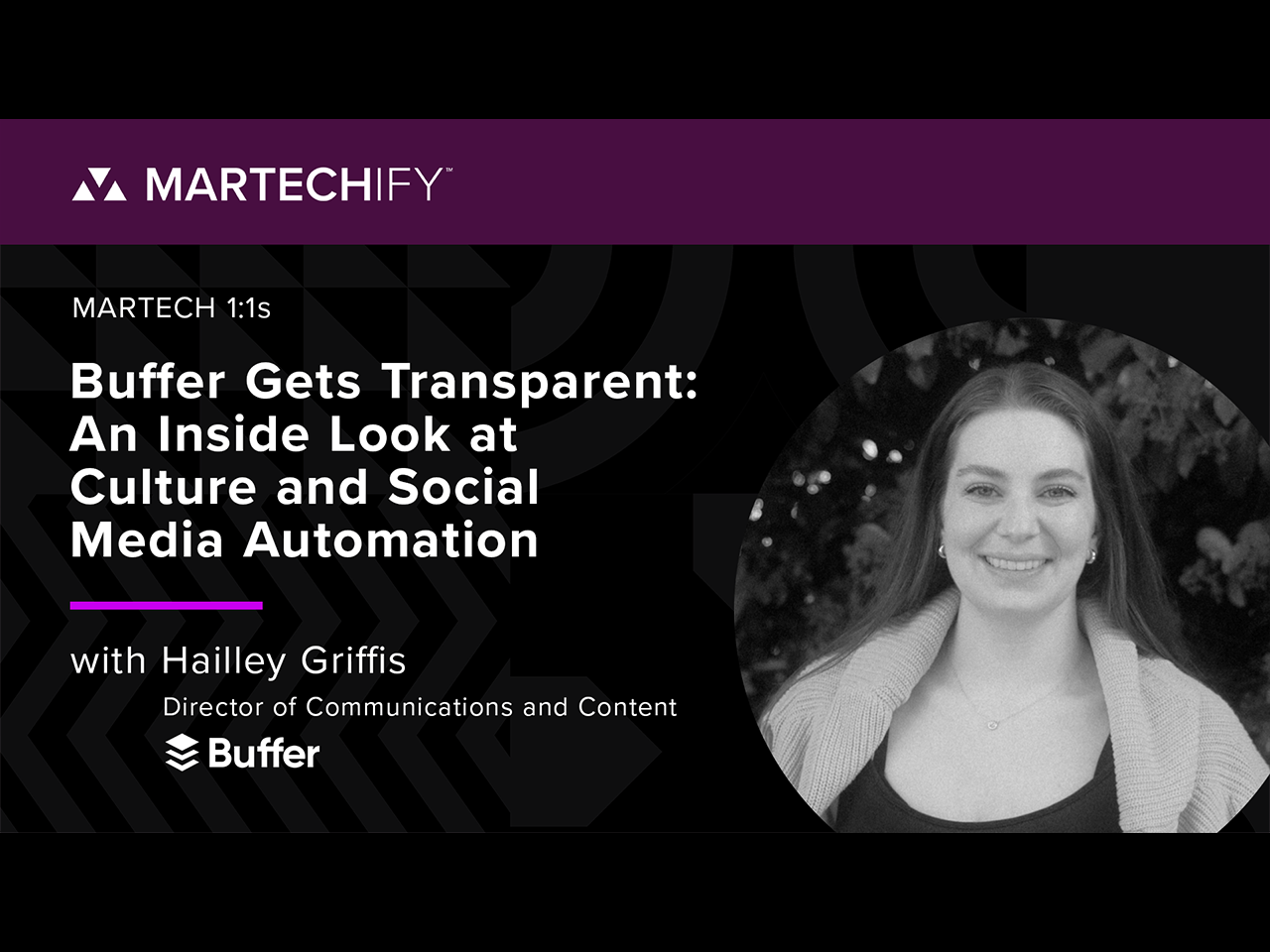
Hailley Griffis, Director of Communications and Content at Buffer
Kothai Sriramachandran, Senior Director of Business Intelligence at Verizon Business Group and Natalie Sartain, Director of Business Intelligence at Verizon Business Group

Jaynie Miller, Worldwide Product Marketing Lead at HP
No posts found