

















Joel Polanco Cover

From Semiconductor Demand to AI Agents: What Comes Next for Technology

When Joel Polanco, Senior Hardware Product Manager in the Data Center & AI Computing Group at Intel, began his career, manufacturing was not considered the most desirable path in technology.

After completing his undergraduate and graduate studies at Arizona State University, Joel had already finished three internships, including one at Intel in Chandler, Arizona. That experience gave him an early look at tech manufacturing and helped shape a career decision that, two decades later, feels especially relevant.

At the time, Joel said, manufacturing was not seen as desirable as software, but that was exactly what drew him to Intel. “I wanted the opportunity to be in manufacturing because I thought it might be going away,” he said.

Now, the opposite is happening. Manufacturing is returning to the United States, semiconductor demand is surging, and Intel is positioning itself at the center of one of the most important technology transformations in decades. “What’s amazing here, twenty years later, is the manufacturing’s coming back and so is Intel,” Joel said, calling this “one of the most exciting points in my career.”

Cinder and Wizz cover

How Platforms Can Fight AI Impersonation, Synthetic Identities, and Online Abuse

As AI tools become more accessible, the risks facing digital platforms are growing just as quickly. Impersonation, phishing, synthetic identities, harmful content, and nonconsensual imagery are no longer edge cases. They are becoming everyday trust and safety challenges for social platforms, marketplaces, and AI-driven products alike.

In a recent Martechify conversation, Glen Wise, Co-Founder & CEO of Cinder, and Alexandra Ryabova, Head of Operations at Wizz App, shared how platforms are responding to this new era of online abuse. Their discussion made one point especially clear: Companies cannot afford to treat safety as an afterthought.

Ben Moore Cover

As AI Fatigue Grows, BeReal Finds New Momentum with Gen Z

As social platforms fill with AI-generated content, algorithmic feeds, and polished creator posts, BeReal sees an opening. Ben Moore, US Managing Director at BeReal, said the app’s core promise of authenticity is resonating again, especially with Gen Z users looking for a more human way to connect online.

In a recent conversation with Martechify, Ben described BeReal as a platform built around a simple idea: Social media should help people stay in touch, not trap them in endless scrolling.

“We don’t want people to spend too much time on BeReal,” Ben said. “We want them to be able to share their moments, check in on their friends and family, and go back to their real lives as well.”

That philosophy stands in sharp contrast to the engagement-first model that shapes much of modern social media. While major platforms often optimize for time spent and ad impressions, BeReal focuses on brief, intentional participation. Its signature once-a-day notification prompts users to capture an unfiltered moment using both the front and back cameras on their phones, showing both what they’re doing and what they look like in that moment.

For Ben, that format remains central to the platform’s identity because it encourages authenticity in a digital environment increasingly crowded with bots, filters, and synthetic content. “People can see what you see, but also people can see your face while you’re capturing this real moment,” he said.

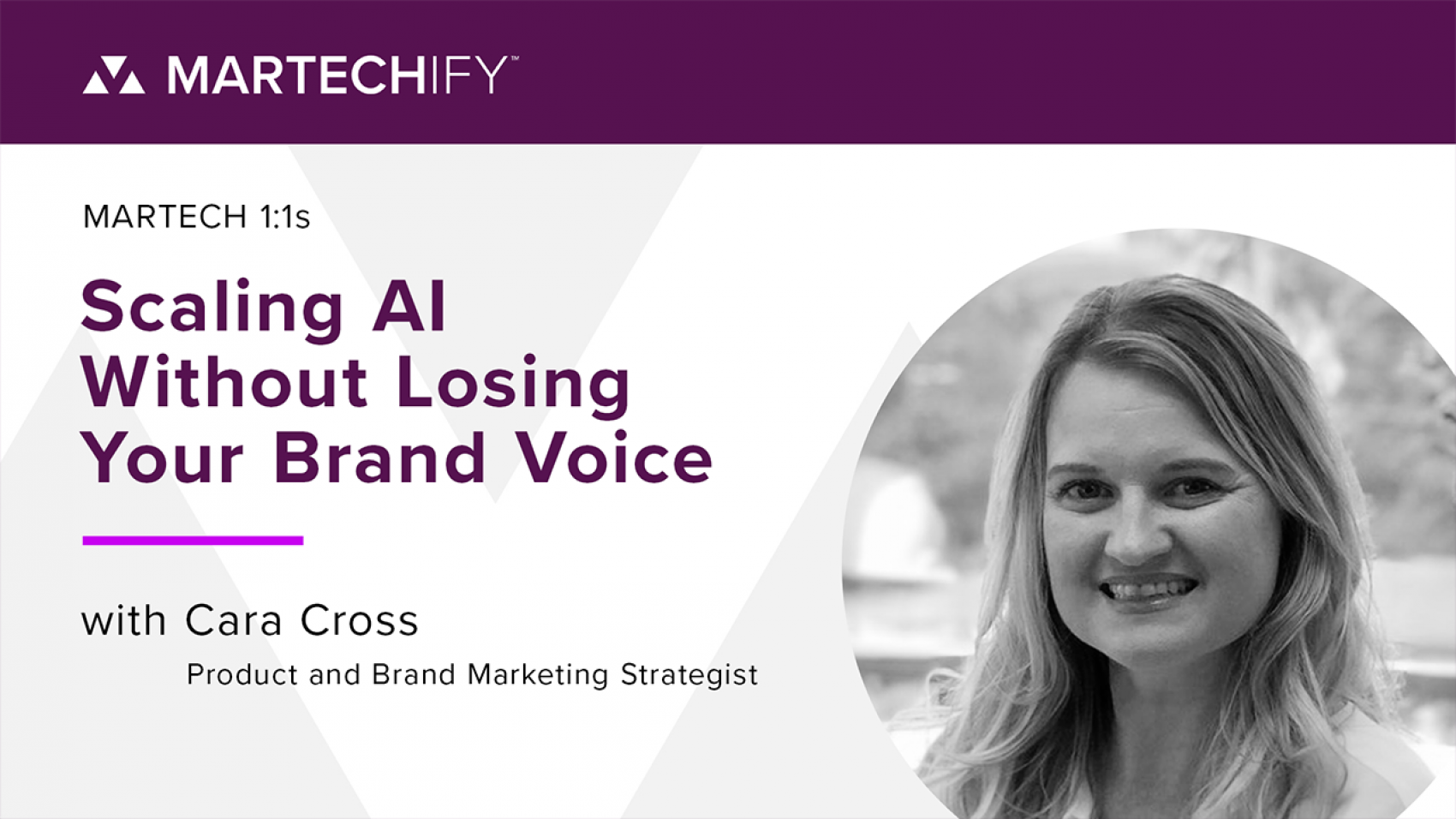
Cara Cross Cover

How Marketers Can Build AI Workflows Without Losing Strategy, Trust, or Brand Voice

AI may be changing how marketing gets done, but the fundamentals have not changed. That’s according to Cara Cross, a Google AI-certified product and brand marketing strategist with more than 15 years of experience across SaaS, CPG, healthcare, higher education, and nonprofit industries. In her view, marketers still need strong strategy, clear audience understanding, clean data, and human judgment.

In a recent conversation with Martechify, Cara described AI workflows not as shortcuts, but as systems that can help teams scale quality work when they are built on the right foundation. She also explained why segmentation still matters, why regulated industries need tighter guardrails, and why chasing every trend is a mistake.

Her central message was simple: AI can make marketing more effective, but only if marketers use it with discipline.

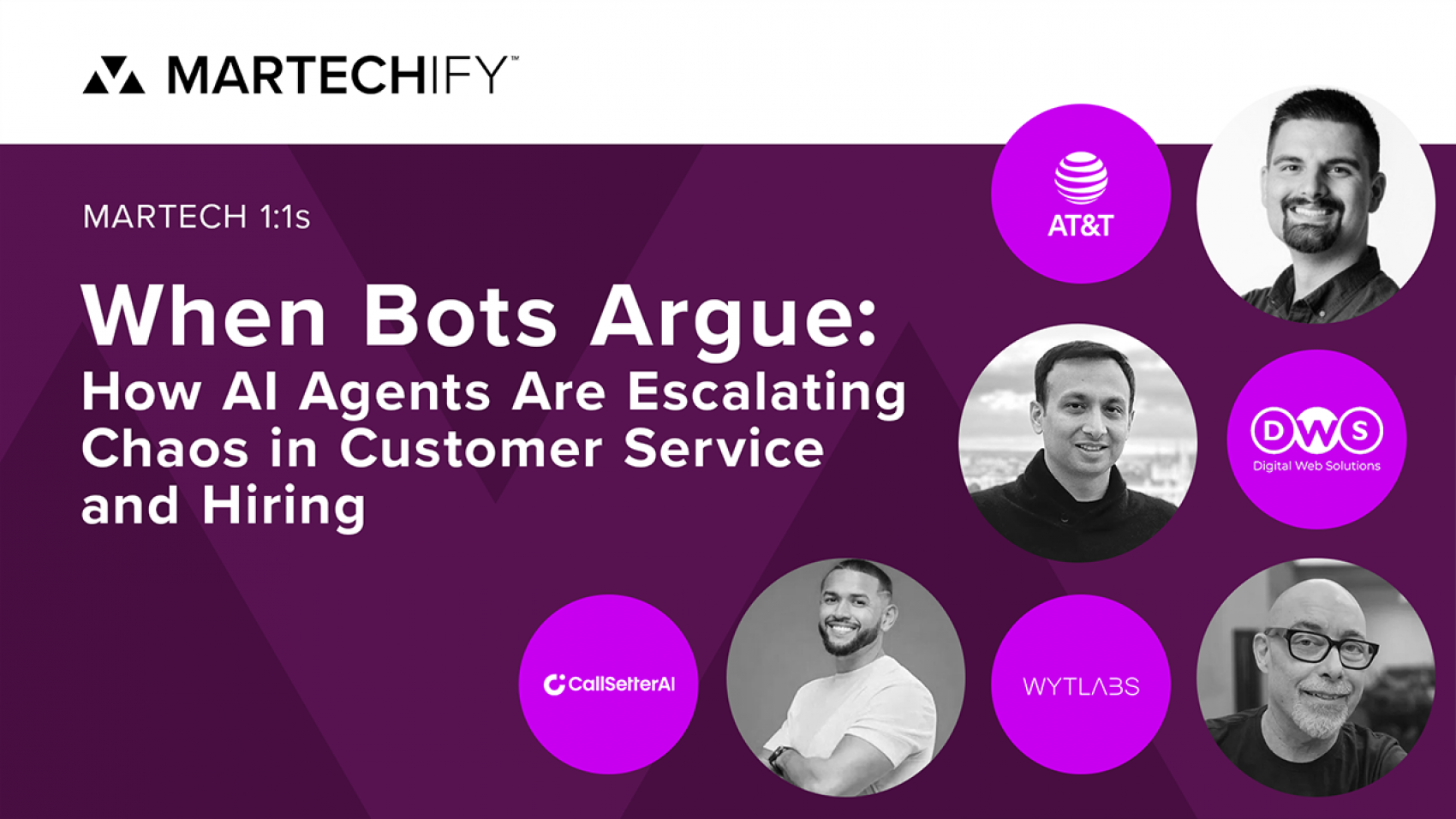
Bots Argue Cover

When Bots Argue: How AI Agents Are Escalating Chaos in Customer Service and Hiring

We are entering a new reality, one where AI agents are no longer just assisting humans, but negotiating directly with each other on our behalf. Customer service bots are disputing claims, escalating complaints, denying refunds, and enforcing policies autonomously, often without meaningful human oversight. AI avatars and digital clones are interviewing candidates, looping, glitching, and freezing in the middle of conversations.

What looked like a dystopian sci-fi movie just two or three decades ago has now become our reality. The problem is that AI agents still lack human judgment and the ability to read between the lines. They can process enormous amounts of data, follow rules, and optimize for efficiency, but they often struggle with nuance, context, emotion, sarcasm, urgency, and ethical gray areas that humans navigate instinctively every day.

As more AI agents begin interacting directly with other AI systems, these gaps become even more dangerous. Two bots can reinforce each other’s rigid logic, intensify conflicts, or create deadlocks without anyone realizing the situation is spiraling.

Loretta Hudelot Cover

What Movies Reveal About Better Market Research and Brand Storytelling

What happens when marketers adopt AI faster than they can build trust, expertise, and better ways of working? In a wide-ranging conversation with the Martechify team, Dr. Denise Rousseau, professor of Organizational Behavior and Public Policy at Carnegie Mellon University, brought a much-needed human lens to some of the biggest questions facing marketing and technology leaders today. From remote work and hybrid schedules to AI adoption, layoffs, loyalty, and leadership credibility, Dr. Rousseau made one point clear: The future of work will not be shaped by tools alone. It will be shaped by the quality of the relationships organizations build with their people.

Denise Rousseau

What a Leading CMU Researcher Taught Us About AI, Remote Work, and Martech Leadership

What happens when marketers adopt AI faster than they can build trust, expertise, and better ways of working? In a wide-ranging conversation with the Martechify team, Dr. Denise Rousseau, professor of Organizational Behavior and Public Policy at Carnegie Mellon University, brought a much-needed human lens to some of the biggest questions facing marketing and technology leaders today. From remote work and hybrid schedules to AI adoption, layoffs, loyalty, and leadership credibility, Dr. Rousseau made one point clear: The future of work will not be shaped by tools alone. It will be shaped by the quality of the relationships organizations build with their people.